The man who knows better
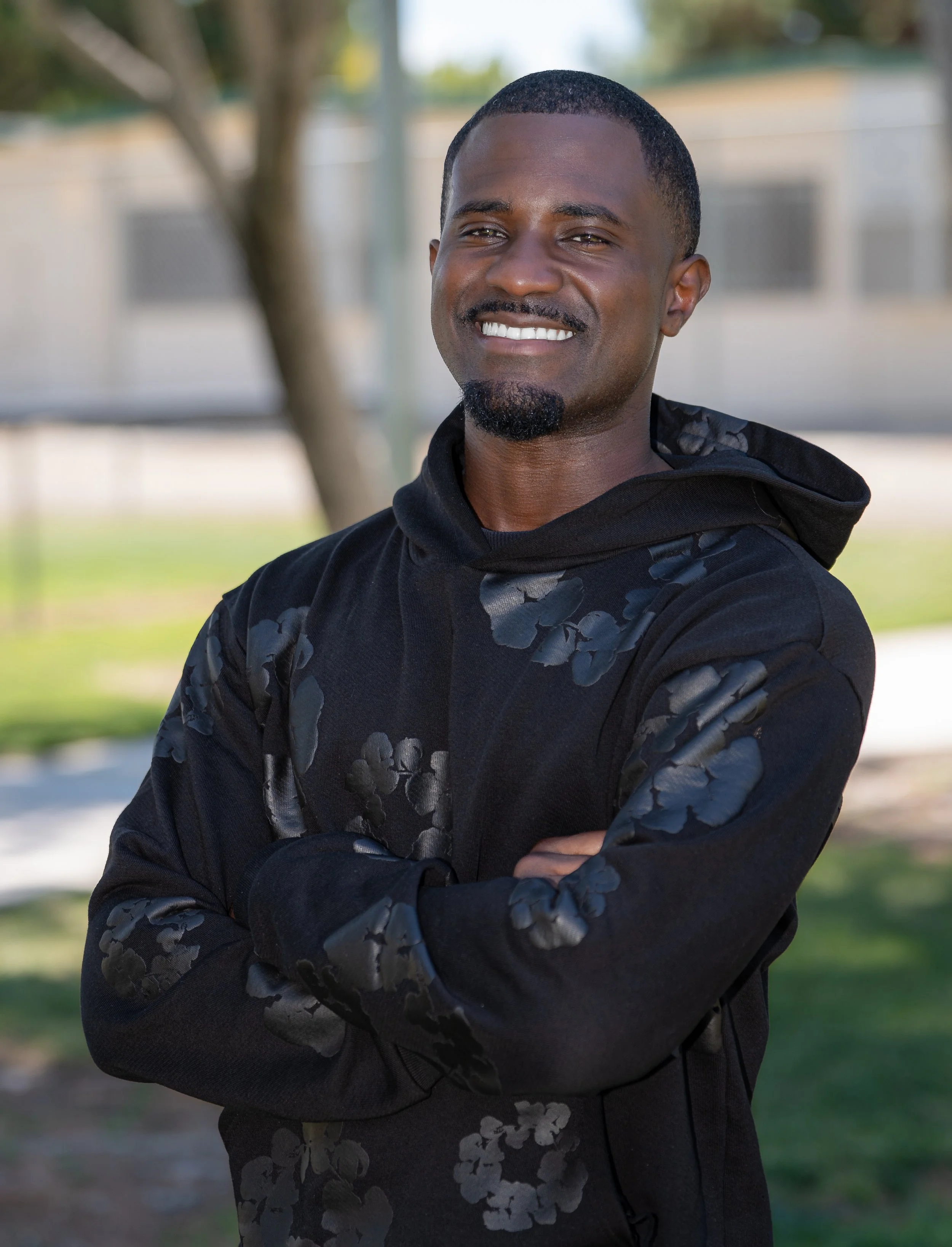
Zaire Dupree Bariban photographed In Victorville, California, August 2026. Photograph by Tiel Bowers.
Zaire Dupree Bariban, 28 years old, from the Inland Empire of California, has come a long way from who he was in his adolescence and young adulthood to who he is now as a full grown man, and I can say that as someone who has personally known him most of his life.
Growing up in the 2000’s, he was the coolest person ever to me, a role model if you will. He was smart, and knew how to dance. He had a sidekick and texted everyone. He was fashionable and wore snapbacks and bulls gear. He has always been very strong and a very fast runner. He got girls, and he was good at sports.
Most importantly though, he was good at video games, which we played a lot growing up over the summers. I wanted to be like him. That was the person I knew when he was with me and family though. There are more sides and faces to a person than just the one you get when you are in their presence.
I wasn't aware of it at the time, but he had a life of his own and his own experiences and struggles. Before he became self aware as a child, Zaire’s biological father was already out of his life due to certain mental health struggles he had been dealing with.
Due to that, unfortunately, he doesn't know too much about him. This ultimately resulted in him being raised by default by his mother and later on down the line by his step father Red for some time. He moved around a lot as a child. From being born in Upland California, moving to Moreno Valley, where his Mother met his step father, then Rancho Cucamonga and ultimately landing in Victorville before moving to Northridge to attend CSUN.
His mother managed to play both roles as a parent and became mother and father to him. To Zaire, his mother has always been a strong, solitary and independent black woman. Although, to him, the label mother and father don't necessarily apply because he views her more as a strong caregiver or guardian and his father was absent. Around the time when Zaire was in the 3rd to 4th grade, he noticed a major shift in his way of thinking and demeanor as a young boy.
That was when he met his stepdad, his mothers ex-boyfriend Red, and was very fond of the man. He taught him a lot growing up at an early age and was also raised around his family of brothers, nieces and nephews and learned from them as well.
At the time, Red was a gangbanger from Compton California so naturally he had a certain set of skills. In my conversation with Zaire, he expressed that the most important thing that was taught to him at an early age was how to read people for who they are and what their intentions might be.
Unfortunately, his mother and Red separated when Zaire was in the 6th grade and three years later when he was in the 9th grade, he ultimately received the sad news that Red had passed away. His death was significant for him, and it deeply hurt him that he no longer walked the same earth as him. Red was his first father figure and with love, he treated him like his own son.
Between the influences around him, the violence he witnessed, and the people he looked up to, Zaire developed a rugged view of life and began to grow a chip on his shoulder. Slowly, he began to indulge in gang activity and violence. He expressed that between the ages of 6-9, he saw several fights between family members and between friends amongst other things that desensitized and normalized it for him as a child and adolescent. As well as being around my Uncle, my fathers brother, doing things around him that should have been done behind closed doors. I share that experience as well with him so I can understand where he is coming from.
My father, who is his uncle, also had a major degree of influence on him in other ways that weren't gang related. In addition to my uncle, they were his older friends that were also steeped in vice. You know those friends you make in high school or college who are older than you, more experienced, and introduce you to a world of things you haven't experienced yet? You learn from them, model yourself after them, and have a great time without necessarily realizing that you're under their influence.
I speak from experience.
Throughout his childhood he fought a lot, other kids and adults. In high school his actions had escalated to selling marijuana, drinking alcohol on a regular basis, taking joy rides, stealing, and hitting licks on cars and homes. All of these actions were influenced by his friends at a young age being that most of them were doing the same things, he just thought it was the thing to do.
When I asked my cousin if there was anything he regretted from his past, he immediately went back to the friends he allowed to lead him astray. Looking back, he said that wasn't really him or who he was meant to be. He believes that if he had better friends growing up, he would've been on the path he's on now ages ago.
According to Zaire, racial tensions were also a part of the environment he grew up in. In his experience, Black and Hispanic students, particularly Mexican students, were often at odds. I’ve seen this type of racial tension between blacks and hispanics first hand myself so I understand how these things tend to transpire, especially in high school settings where people tend to clique up.
At seventeen, after Highschool, Zaire attended California State University Northridge and completed a full three years before he disenrolled himself. He had decided he had learned enough and the money was no longer worth spending. For a time he traded currency and other things like crude oil and gold, as well as being an entrepreneur and running his own home cleaning business. He also met the mother of his two sons there, Haley.

Zaire Bariban and Haley at the LA County Fair, 2017. Photo by Tiel Bowers.
My father died in June of 2019. At the time, I was dealing with problems of my own, and his death changed nearly every part of my life. My mindset changed, my circumstances at home changed, and so did my wants and needs. Somewhere in the middle of all of that, a rift formed between Zaire and me. We wouldn't speak again for nearly five years.
During those five years my cousin was on his own journey.
Figuring out his own life, working hard, Distancing himself from others he no longer related to, moving around again, working out the kinks in his relationship with the mother of his kids, and to my surprise he joined the United States Army.
He never imagined he'd be on the other side of the law, neither did I. His perception of any officer or enforcer of the law was that of his peers. He came to the realization that everyone has a job to do.
To add a bit more to context as to why I was so shocked I'd like to give an example using a memory of mine.
During my teen years when I was still in high school trying to figure out career paths in my senior year, I had floated to him that I had been thinking about becoming a Police Officer. The reason I had been pondering it was because of my circumstances at home. My mother had been raising my two brothers and I alone at the time because my father was quite the deadbeat, and we were a very low income household.
Through that I met this councilor at my school, and I can't quite remember her name which I'm ashamed to admit but nonetheless she was able to help immensely by completely covering the cost of prom tickets, graduation tickets, and even went as far as renting a suit for me to wear to the prom. Her husband was a cop and he gave me advice on how to navigate life and let me know what being a cop was like from his perspective as an upstanding black man in America in 2017, and it really inspired me to want to become one at that moment.
I called up my cousin.
I remember telling him about it, how I was thinking about becoming a cop right out of high school or at least after I finished my education at CSUN. He's always been two years older than me, I would have been sixteen at this time, so he would have been eighteen. Bluntly, he told me he'd never speak to me again if I became an officer of the law.
Remember how at the beginning I said this man was an Army Veteran?
People change.
When I asked him why he would do such a thing, he answered, “Covid.”
Covid changed everything for everyone.
Around this time, Zaire needed to figure out his next move. He had his first child, Zylin, in October of 2020. He had been working at Valley Presbyterian Hospital in Van Nuys, California, and wasn't willing to get the COVID vaccine. He didn't have any interest in returning to school at that moment either, and with how young he was, he figured he had time to kill. So, before making the decision to enlist, he consulted a couple of people.
Those people being the grandparents we share on my father's side. Our grandmother encouraged him to go for it, and our grandfather did as well, recounting his own experience in the service. With all of that in mind, in the month October, 2021, Zaire went for it.
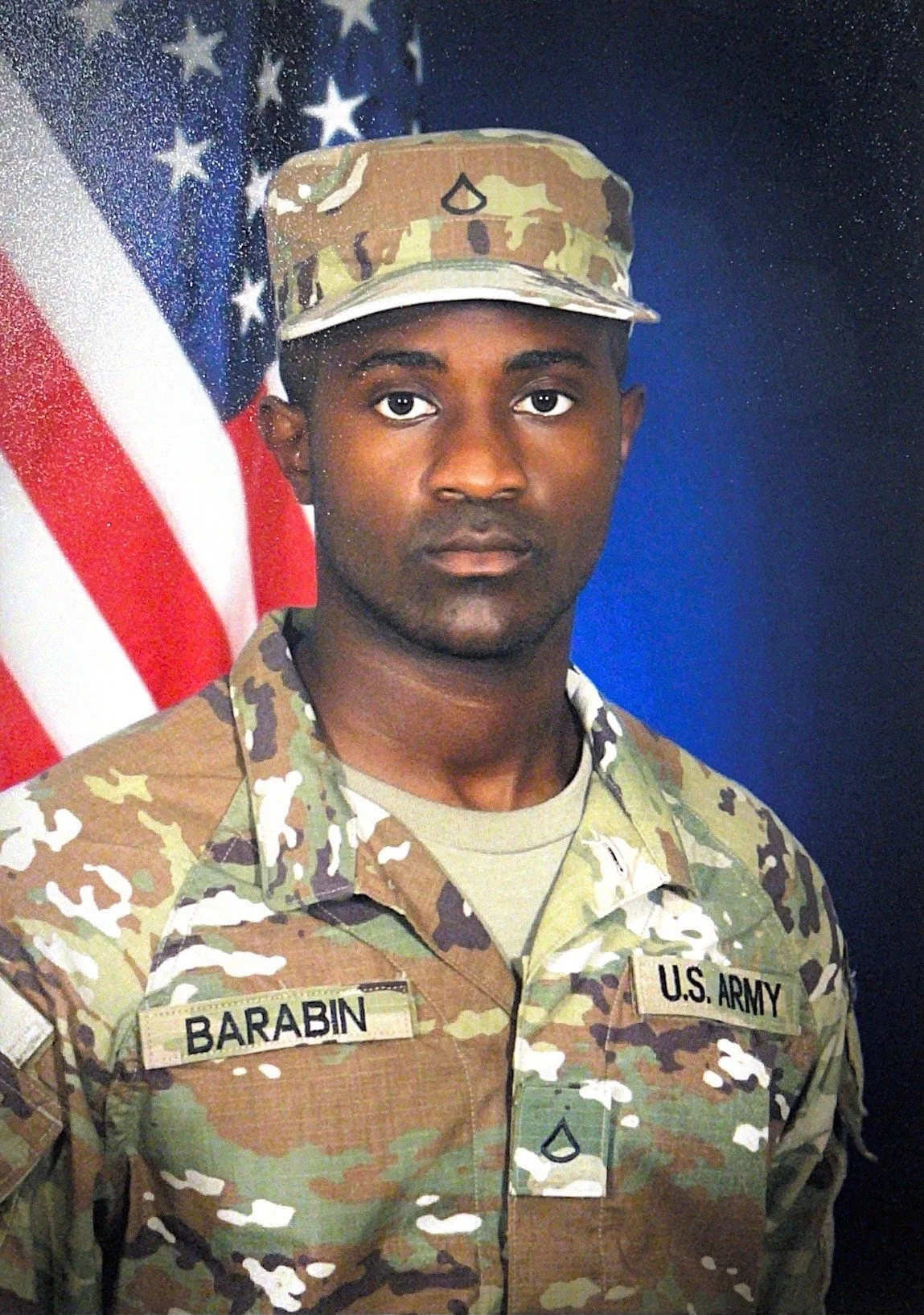
Zaire Bariban during his service in the U.S. Army, [2021]. Courtesy of Zaire Bariban/U.S. Army.
Growing up with Zaire, truthfully, whenever we were out, older white folks always gave him stares. Not to say all of them were hostile or any of them were for that fact but It was a constant occurrence that, when we were out and to certain extent, it bothered him. So one of the first things I asked him about the Army was whether he had experienced any racism.
To my surprise, he said no.
What he did say was that there was a genuine culture shock and disconnect between him and those he met at Fort Benning in Columbus, Georgia. He detailed that most of the people there were from the Deep South or Midwest and were predominantly white. Besides Zaire, there were only three other Black people from California with him at Fort Benning. One was from Los Angeles, another from La Verne, and he couldn't recall exactly where the third was from.
Saying things like “nigga” amongst themselves, expressing their views on rap and music in general, and even some of their general worldviews were considered odd or novel by the people around them. Other recruits would sometimes give them odd looks or distance themselves from Zaire and the other Black recruits, even though they essentially had to do everything together.
Zaire wasn't close-minded about the differences either. He picked up a bunch of new music while in Georgia, including AC/DC, Arctic Monkeys, and other bands. On the other hand, recruits from the South or Midwest would sometimes go out at night to catch snakes. The Black recruits respectfully declined.
Recruits also boxed whenever problems arose between them, tensions were high, or they simply needed to relieve some aggression or at least that's how Zaire remembers it. After being out in the heat all day, being ordered around, not having sex in a while and generally living on top of one another, problems were bound to arise. According to him, the sergeants overseeing them sometimes allowed two recruits with a problem to settle it through boxing, scheduling the fight for later that day or the next.
In his own words, and this I expected from him, nobody wanted to box him or ever really had a problem with him. In other words they didn't want to FAFO. Zaire is a no nonsense type of guy so when others fought over what could be considered petty arguments like who's the bigger or badder individual he usually had no problems at all and got along with everyone. In Zaire's experience, the Black recruits he fought or watched tended to rely more on their hands and boxing ability, while many of the white recruits he encountered were bigger or bulkier and relied more heavily on their size. When it came to combatives, though, that size could become an advantage.
Army combatives are hand-to-hand combat drills designed to teach soldiers how to fight, control an opponent, and defend themselves in close-quarters situations. During these drills one recruit typically has a gun or knife and the other has to defend themselves and disarm them. They typically involve practicing techniques such as grappling, striking, takedowns, escapes, and controlling an opponent, with an emphasis on building practical combat skills, confidence, and the ability to continue fighting under physical stress.
Though boot camp wasn't always a breeze for Zaire, slowly, he began to accumulate injuries through training. Exercises that required jumping and landing on his feet sent repeated shock through his body and began to hurt his spine. Determined to power through it and not show any weakness, he essentially escalated the seriousness of his injury.
The final straw came during an exercise where he had to pick up a .50-caliber weapon. According to Zaire, he lifted it improperly, severely injuring his lower back. An X-ray of his spine would later reveal the extent of the damage. In addition to that he developed acute depression, as well a broken finger, and acute ankle damage.
He could not walk and was bedridden for a period of time and subjected to seven months of Physical Therapy. He was even offered surgery for his back, but because of the risks involved, he respectfully declined and decided to let time heal what it could. Back pain, when serious enough, is painful enough to make a grown man cry. Unfortunately, time only healed some of his injuries, not all of them, and in 2023, after about fifteen months served, Zaire was discharged from the Army.
At first, Zaire was reluctant to even consider leaving the Army. After consulting with elders who were also serving in the army, however, he changed his mind. They pointed out that the U.S. Army was giving him the opportunity to leave with veterans' benefits and disability compensation rather than signing on for another number of years and potentially worsening his injuries. There was no point in putting his body through more. If it weren't for his back injury, he says he would've stayed.
Around this time, Zaire was stationed in Washington and had been planning on raising his child there. He had already moved his family, Haley and Zylin, from California to Washington to be with him in 2022. In January of 2023, Zaire moved back to California, and a month later, Haley gave birth to his second child, Aziah. After returning to California and the birth of his second child in 2023, Zaire also returned to CSUN to finish the education he had stepped away from years earlier. In 2024, he graduated with a degree in Psychology.
Today, the two co-parent their sons, Zylin and Aziah. For Zaire, becoming a father also meant taking on a new set of responsibilities and priorities that were far removed from those he had during his younger years.
Nowadays, in 2026, Zaire is a completely new person, far from the individual he once was and the individuals he surrounded himself with. He's a family man, veteran and medical student with priorities. Spending most of his time studying for his exams and if he isn't studying, he's spending time with his kids. Raising them, nurturing them, pouring into them what he wished was poured into him. Raising the change he wants to see in the world.
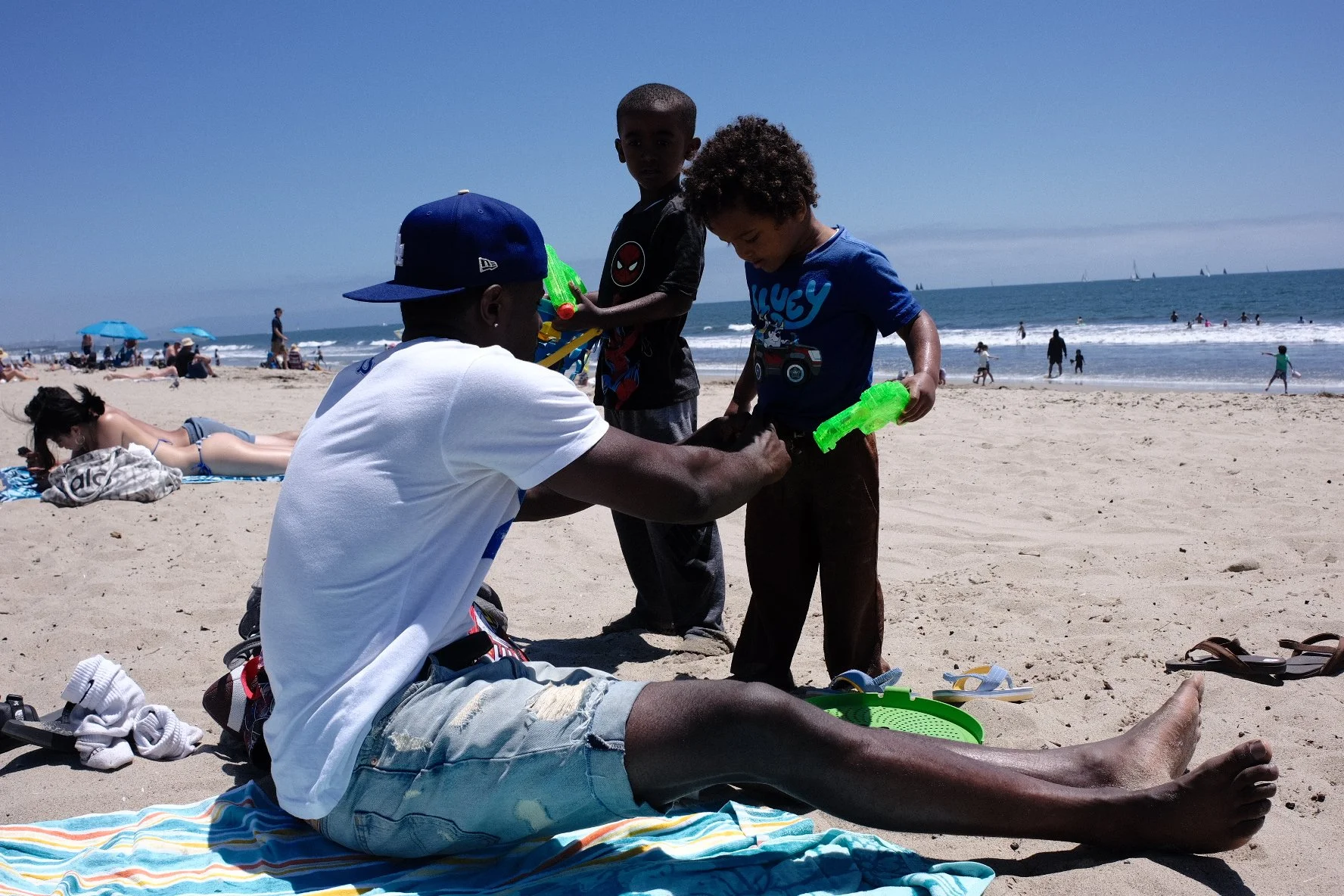
Zaire Bariban spending time with his sons, Zylin and Aziah, at Santa Monica Beach, 2026. Photo by Tiel Bowers.
To Zaire, his kids are representative of him. So when you see them, you see him.
The blind are no longer leading the blind.
The village is stronger, and its elders wise.
When I was younger, I wanted to be like my cousin. My reasons were simple, and they were things you could notice at surface level. After interviewing my cousin and speaking to him for almost four hours, now at the age of twenty-six and him twenty-eight, I realize he still inspires me to want to be more than I currently am.
Zaire is a very hardworking and self-driven individual with goals and the raw talent to adapt to any situation he's in. He's always hustled, always has an idea in his back pocket, and has the wherewithal to see things through. Personally, I admire the confidence he has in himself.
There is no doubt that even if he stumbles and falls, he'll stand right back up and keep charging on. That's what he has always done. It's not that he's made all the right decisions and that's why he is where he is today. It's because he never stopped. He learned from his mistakes and got better. The man he is today is an accumulation of all his failures and successes. First we learn, then we gain experience, and eventually that experience and what we've learned turns into wisdom for us to use going forward. We know better.
Today, he is a man who knows better.
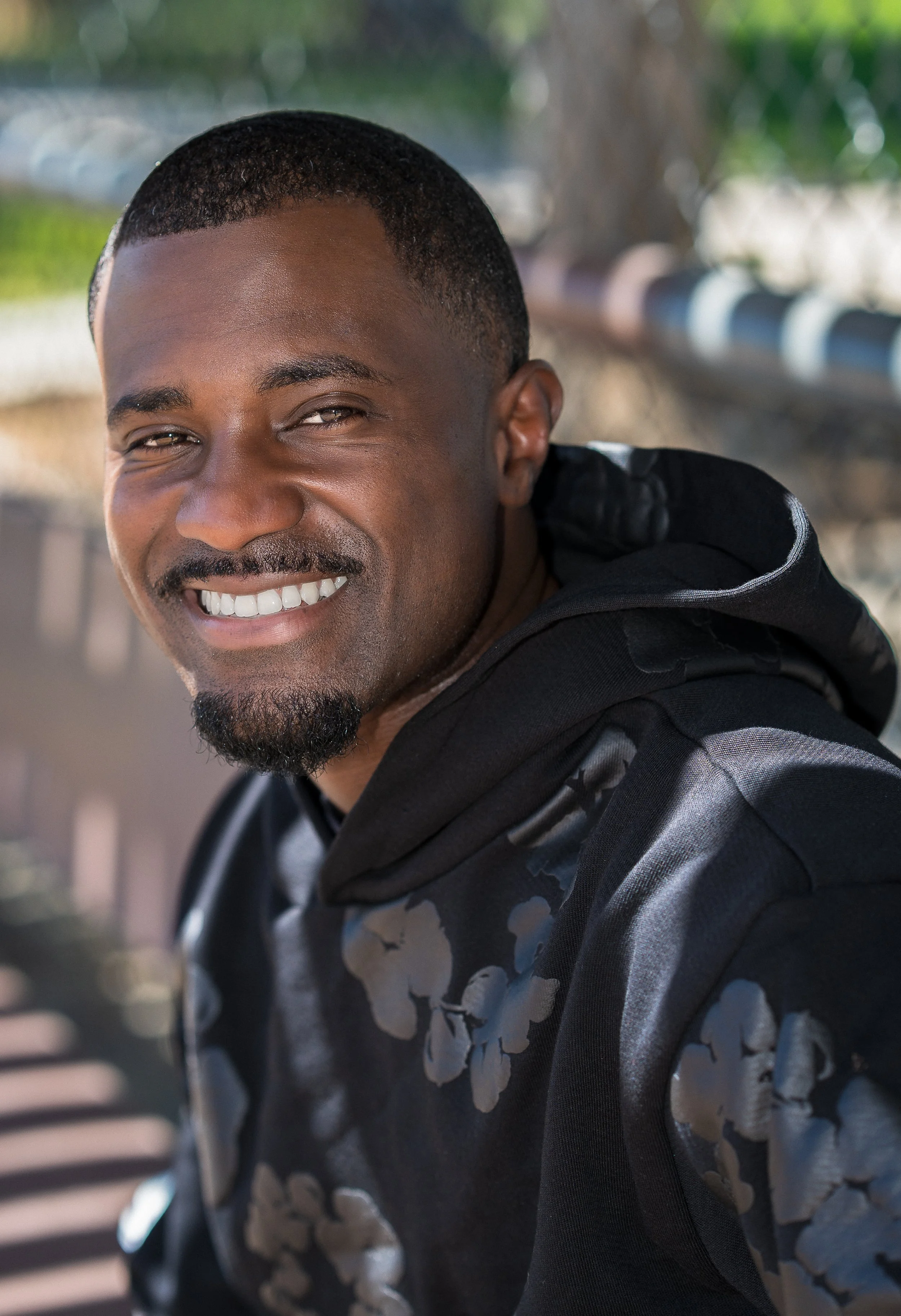
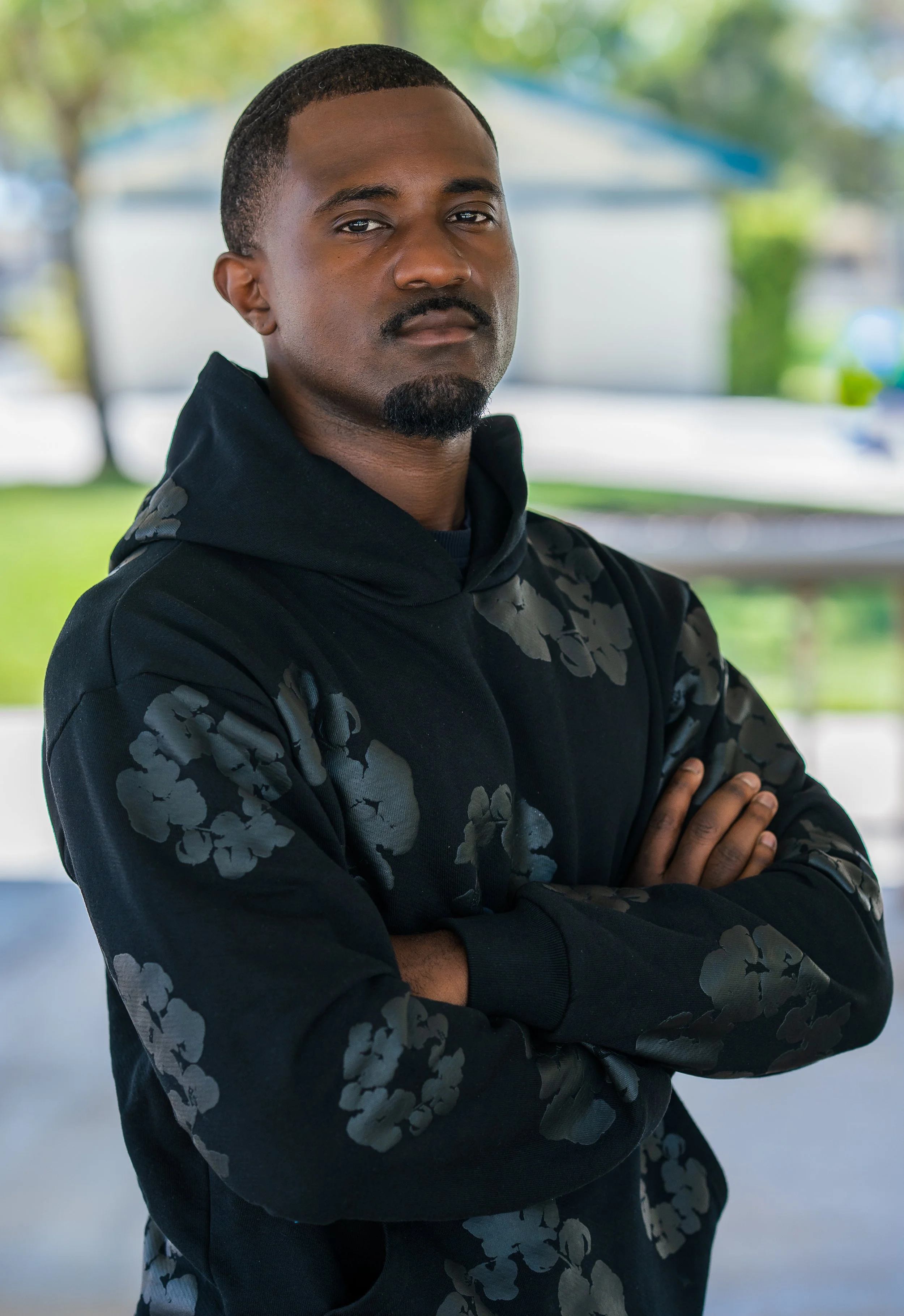
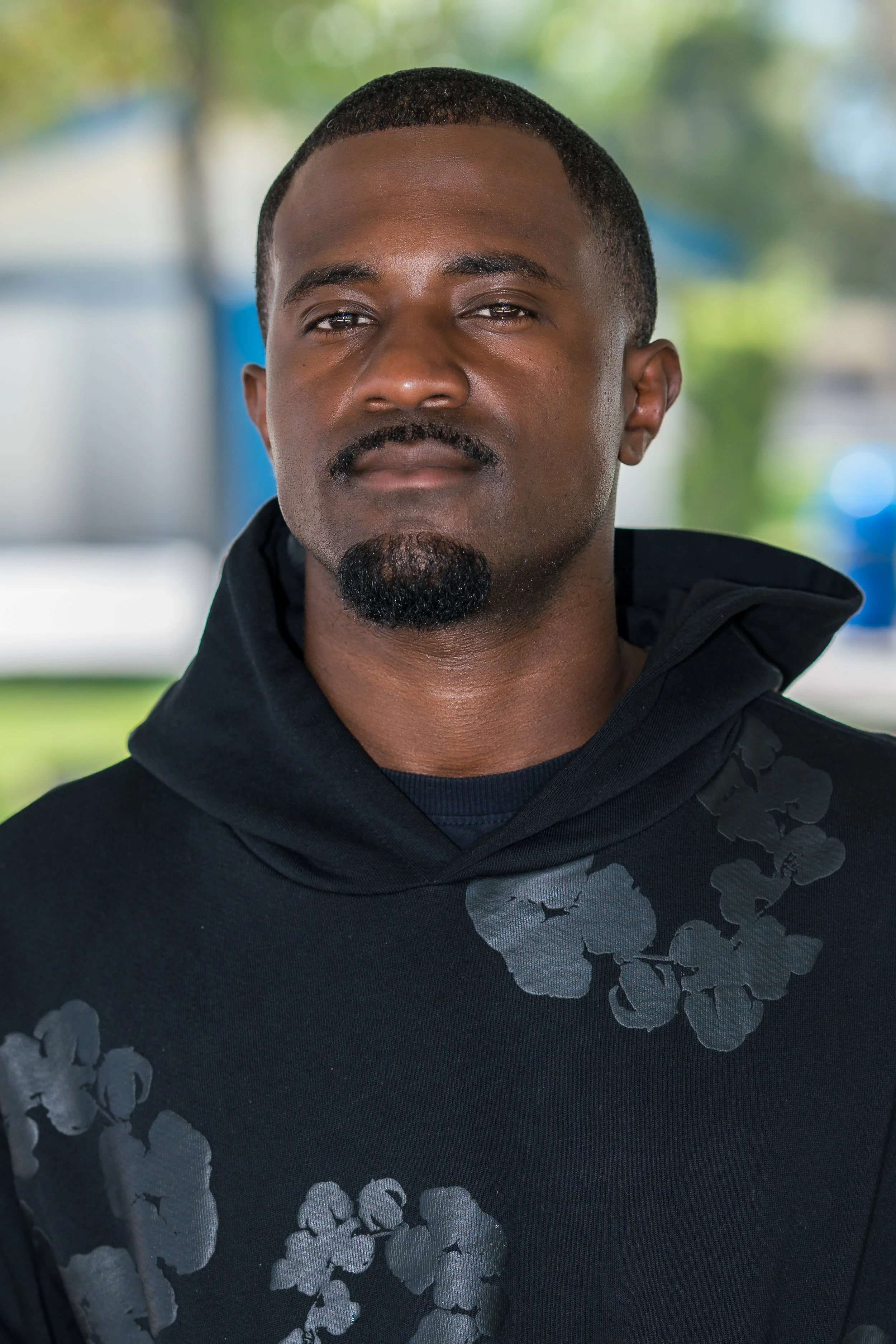
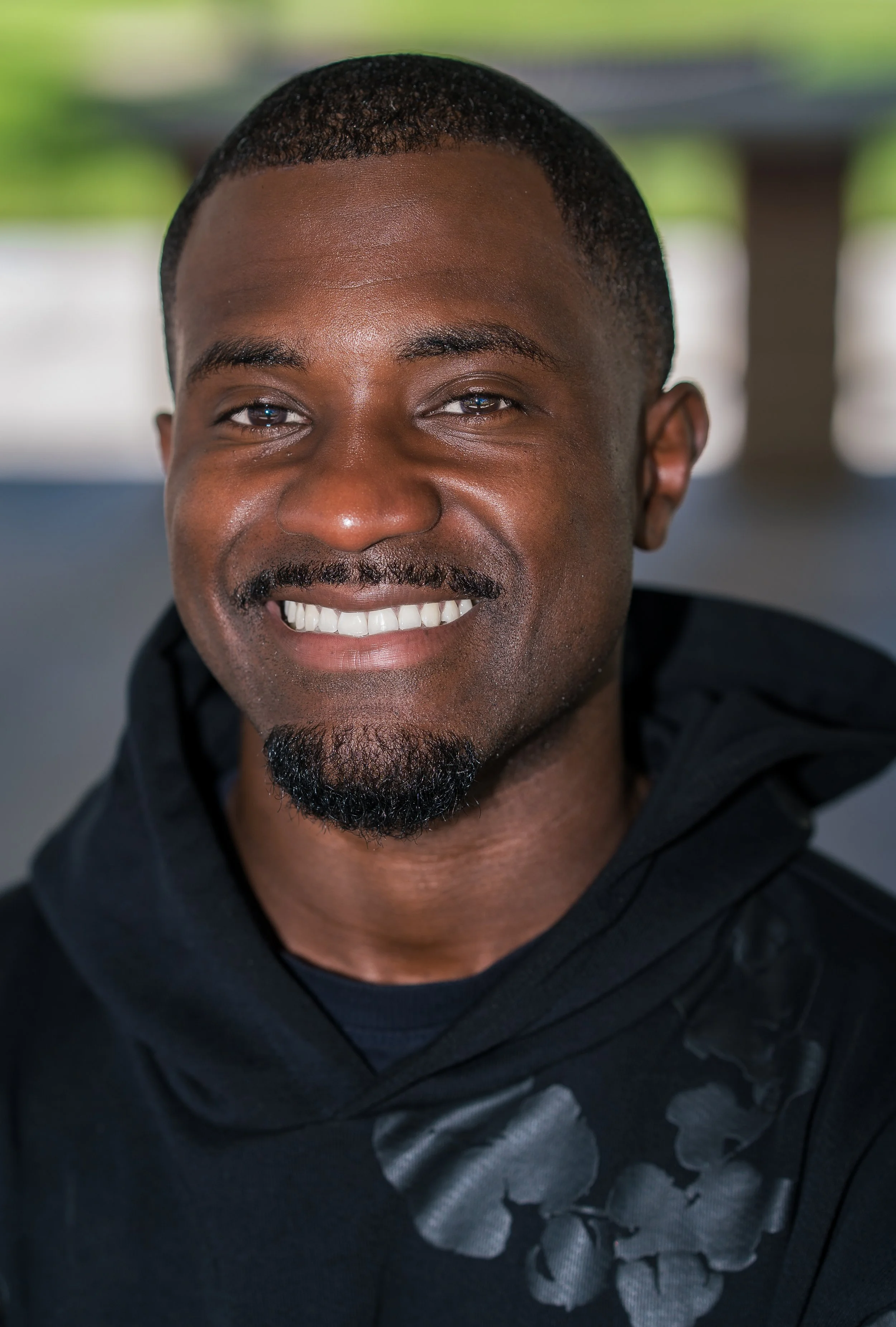
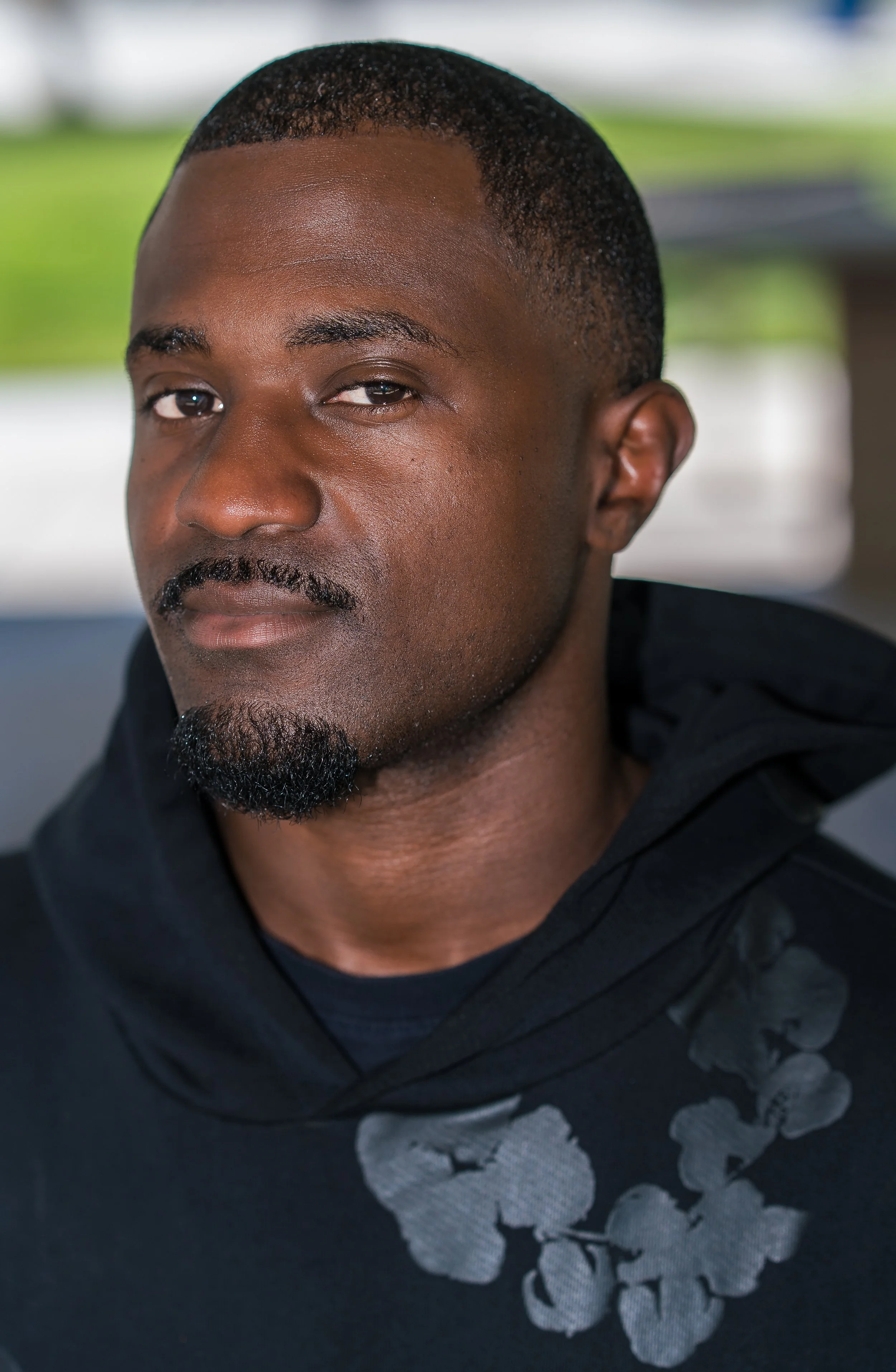
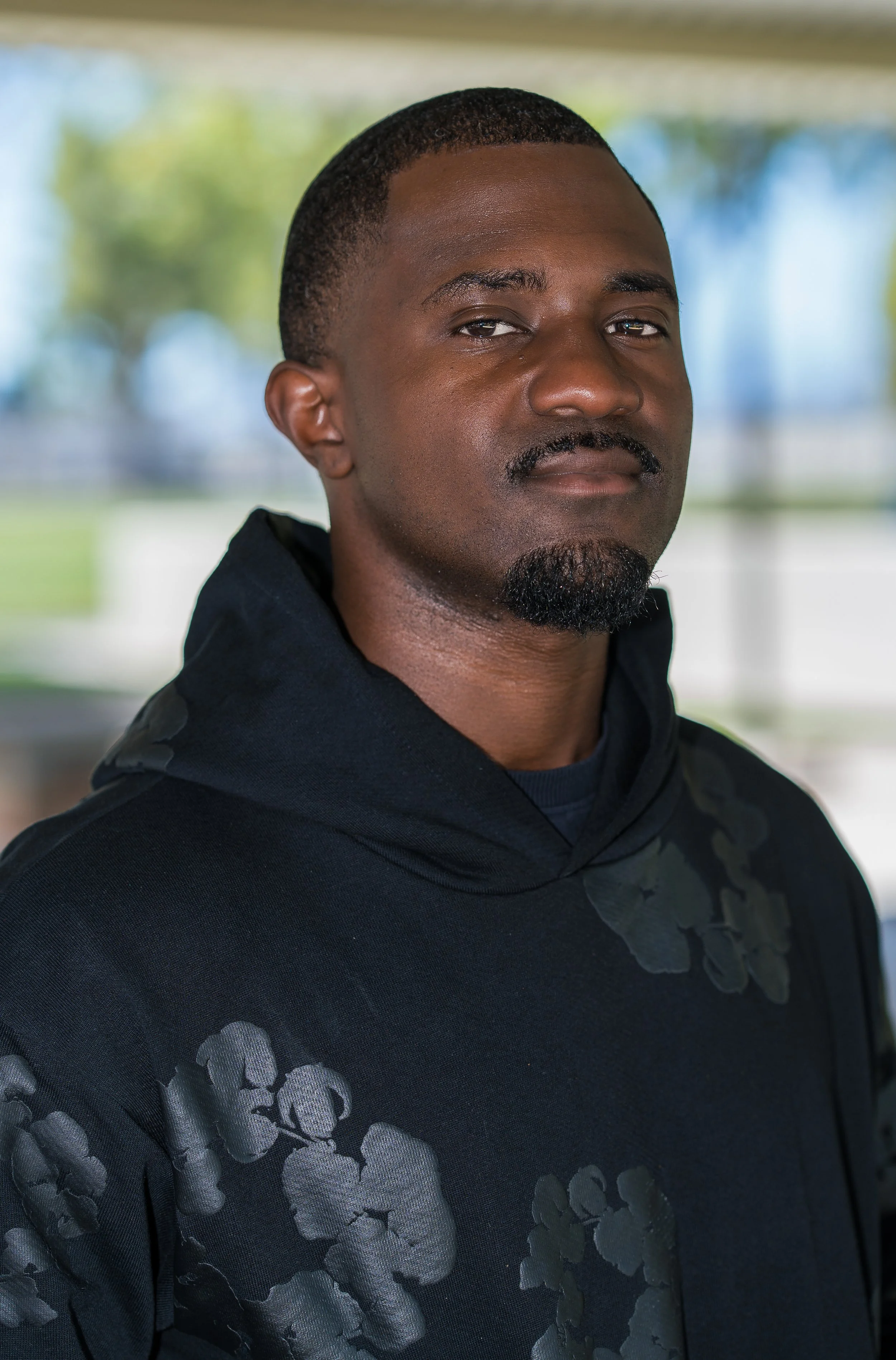
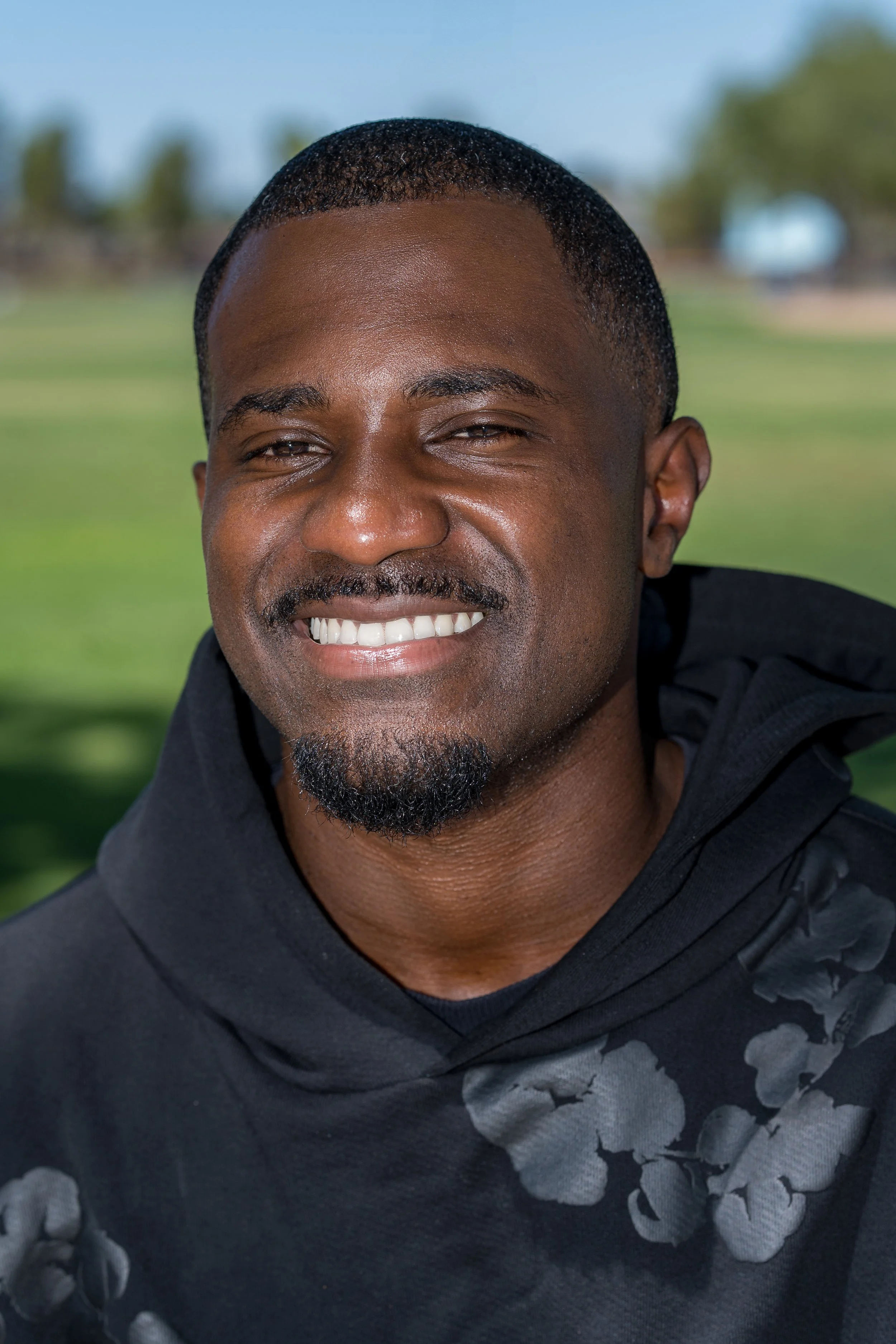
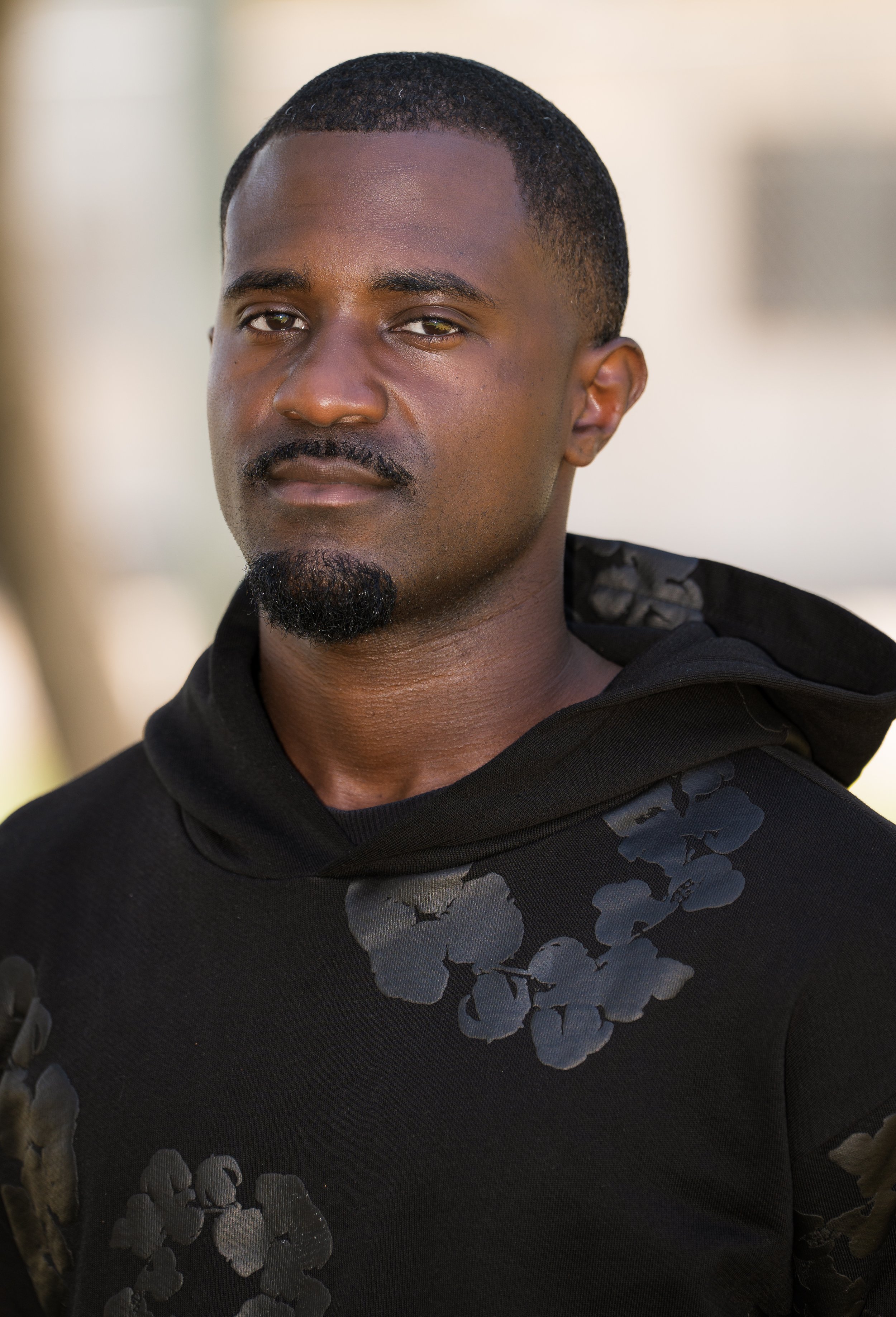
Zaire Dupree Bariban photographed In Victorville, California, August 2026. Photographs by Tiel Bowers.
